
How Many Restrooms Does a Farm Crew Need?
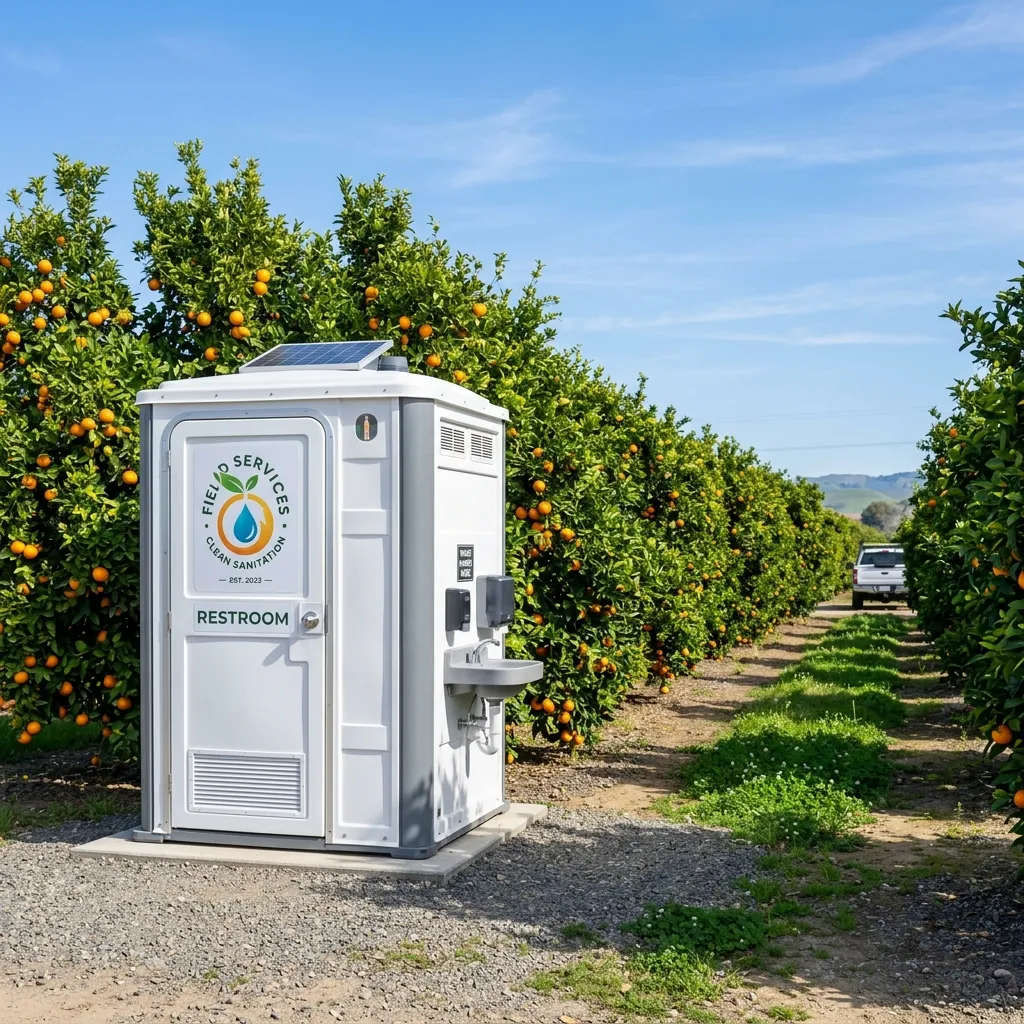
Start with the headcount, not the acreage. OSHA 1928.110 sets the field sanitation baseline for agriculture: potable water, toilets and handwashing for hand-labor employees, at one facility per 20 workers, and it has to sit within a quarter mile walk of wherever people are working. That quarter mile matters more on a farm than almost anywhere else, since crews spread out across rows and pivot circles far from any fixed building. If you're running pickers across two fields a half mile apart, you likely need units at both, not one in the middle.
Standard units make sense for most row-crop and livestock operations. They run 100 to 350 dollars a day, and closer to 200 dollars typical for a week of rental. If you're staging equipment or supplies alongside the crew, a storage container rental can sit right next to the restroom setup so tools and porta-potty servicing don't compete for the same gravel pad. Farms near Auburn, AL that lease ground in multiple parcels sometimes need units split across sites rather than clustered in one spot, and that changes the delivery math more than the sticker price does. Use the porta potty rental cost breakdown if you're comparing day rates against a full monthly porta potty rental for a longer growing season. For a fast gut check on headcount versus units, the how many porta potties do I need guide walks through it directly.
| unit | duration | low | typical | high |
|---|---|---|---|---|
| standard | day | 100 | 150 | 350 |
| standard | week | 130 | 200 | 500 |
| standard | month | 125 | 200 | 325 |
Where Should Units Sit on a Working Farm?
Firm, stable ground beats proximity to the barn every time. A standard unit measures about 44 by 48 inches on the ground and stands roughly 92 inches tall, so it needs a pad that won't sink under a service truck in wet Alabama clay. ADA Standards section 302.1 calls for stable, firm, slip-resistant surfaces, and that standard is worth following even where accessibility compliance isn't strictly required, because a unit that tips or sinks is a bigger problem than a unit that's slightly out of position. If your crew includes anyone using a wheelchair or has mobility limits, ADA Standards section 213.2 requires at least one accessible unit in any cluster, and ADA Standards section 304.3.1 calls for a 60 inch turning circle around it.
Placement near equipment staging works if you keep clear truck access for weekly service. Farms outside Auburn proper, especially operations closer to Loachapoka, 6.6 miles west, or out toward Notasulga, 12.7 miles west, should plan delivery routes around gravel access roads that a pump truck can actually turn around on. ANSI/PSAI Z4.3 sets one service visit per week as the baseline for up to 10 users over a 40 hour week, so a crew that size on one field usually needs just one weekly stop, not daily service. Larger operations running two or three crews at once should look at construction site services style planning even though it's farmland, because the math on unit counts per worker is the same.
Do Farms Need Handwashing Stations Too?
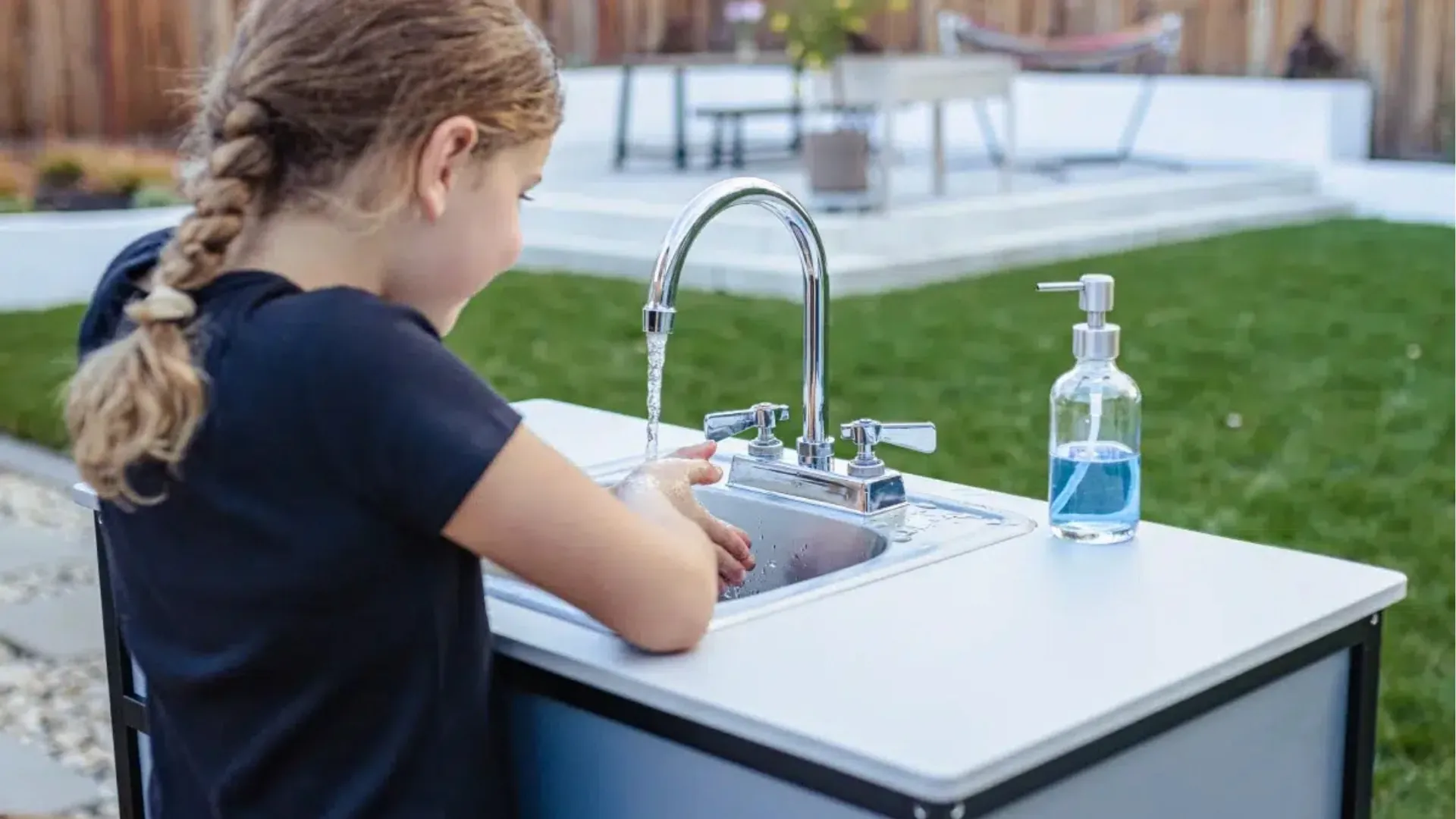
Yes, separate from the toilets. 29 CFR 1910.141(d)(2) requires washing facilities stocked with soap and towels or a hand-drying device, and hand sanitizer alone doesn't satisfy it. Farms spraying herbicides or insecticides fall under a different rule: OSHA 1926.51(f)(1) requires washing facilities specifically where workers apply paints, coatings, herbicides or insecticides, so any crew handling chemical treatment needs a wash station within reach, not just a jug of sanitizer in the truck bed.
A basic handwashing station rental or portable sink rental pairs well with restroom units on a shared pad, and it keeps you compliant without adding a second delivery trip. If you're running a produce operation near Auburn with packing or grading on site, a portable restroom rental paired with a wash station covers both field crews and packing staff under one setup. Livestock operations sometimes need this more than row crops do, especially around calving or processing. And if your farm ever hosts a corn maze, pumpkin patch or fall event open to the public, that's a different sanitation load entirely, closer to what an event restroom rental or festival restroom rental plan would call for.
How often does a farm restroom get serviced?
Weekly is the standard interval under ANSI/PSAI Z4.3 for up to 10 users across a 40 hour week. Bigger crews or harvest season peaks may need twice-weekly service. Confirm your schedule when you book so pump trucks aren't turned away at a locked gate.
Can one unit cover two separate fields?
Not if they're more than a quarter mile apart. OSHA 1928.110 requires facilities within a quarter mile walk of hand-labor workers, so split fields usually need separate units rather than one shared unit in the middle.
What size unit works best for farm use?
A standard unit works for most crews: 44 by 48 inches footprint, 92 inches tall, with a 60 to 70 gallon tank. See standard porta potty rental for full specs before you order.
Do we need an ADA unit for farm labor?
If any worker uses a wheelchair or has mobility limits, yes. ADA Standards section 213.2 requires at least one accessible unit per cluster. Check the ADA accessible porta potty page for dimensions.
What if we need service outside Auburn?
Delivery reaches farms around Auburn and nearby towns like Opelika, 8.8 miles northeast, and Tuskegee, 21.0 miles southwest. Check service areas or request a quote for your exact location.
Next step
Get a delivery date
Tell us the address, the dates and the headcount. We size the order and confirm the route.